

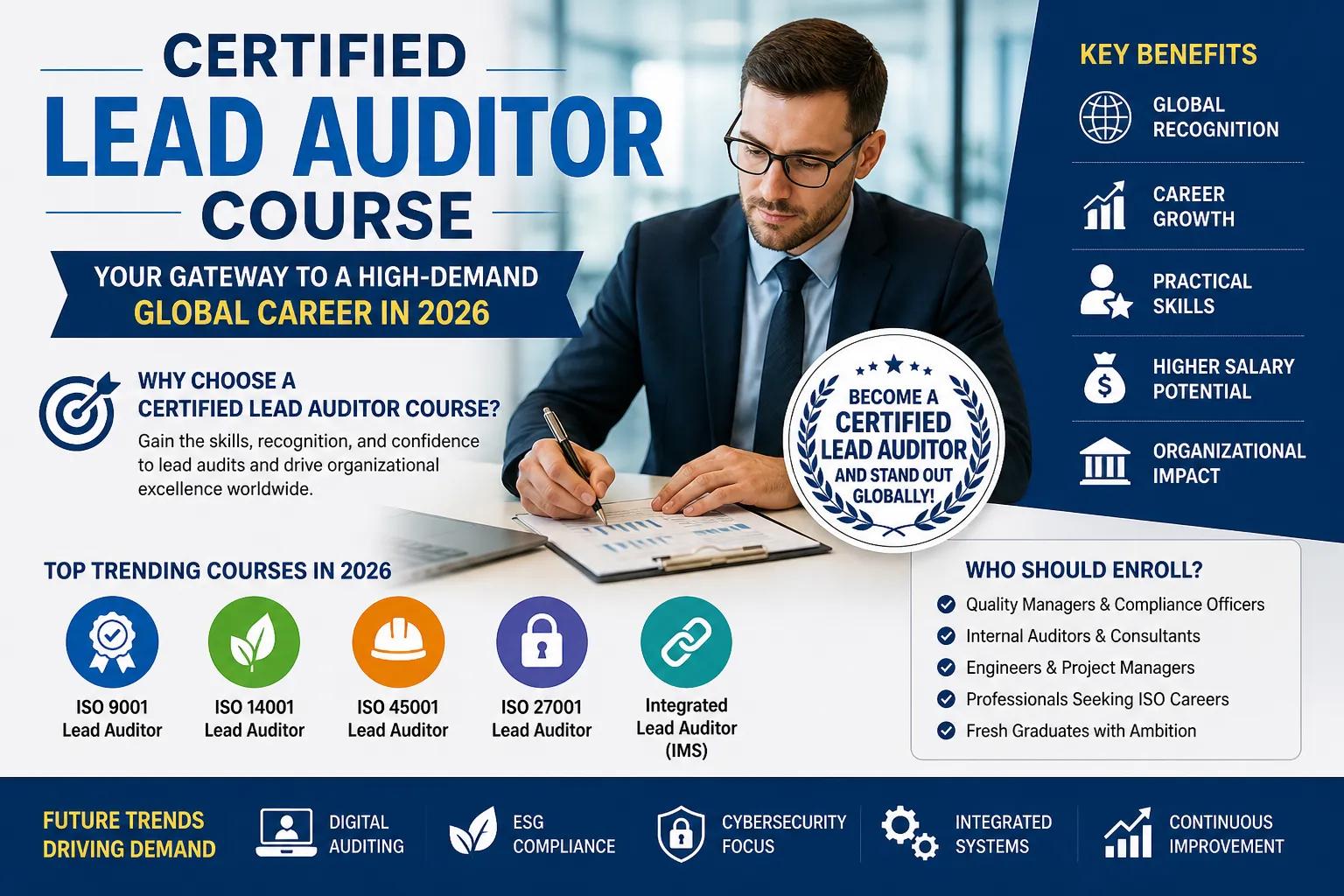
Certified Lead Auditor Course
Introduction
A Certified Lead Auditor Course is one of the most respected professional training programs for individuals who want to build expertise in auditing international management systems. Organizations across manufacturing, healthcare, information technology, food safety, construction, logistics, pharmaceuticals, and service industries depend on certified lead auditors to evaluate compliance, improve business processes, and support continual improvement. Completing a Certified Lead Auditor Course provides the practical knowledge and internationally recognized skills required to conduct first-party, second-party, and third-party audits with confidence.
As organizations increasingly adopt AI-driven quality management systems, digital auditing platforms, ESG reporting, and integrated management systems in 2026, qualified lead auditors are in greater demand than ever. Whether you are a quality professional, consultant, compliance officer, or aspiring certification auditor, a Certified Lead Auditor Course can significantly enhance your career opportunities and professional credibility.
1. What is a Certified Lead Auditor Course?
A Certified Lead Auditor Course is a comprehensive training program designed to develop the skills required to plan, conduct, lead, and report management system audits according to internationally accepted auditing principles.
These courses are available for several ISO management system standards, including:
ISO 9001 – Quality Management System
ISO 14001 – Environmental Management System
ISO 45001 – Occupational Health and Safety Management
ISO 27001 – Information Security Management
ISO 22000 – Food Safety Management
ISO 50001 – Energy Management System
ISO 13485 – Medical Device Quality Management
The course combines classroom instruction, practical case studies, audit simulations, group discussions, and written examinations to prepare participants for real-world auditing responsibilities.
2. Benefits of a Certified Lead Auditor Course
Completing a Certified Lead Auditor Course offers substantial benefits for professionals and organizations alike.
Professional Benefits
Gain internationally recognized auditing credentials
Improve career prospects across multiple industries
Enhance leadership and communication skills
Increase earning potential
Develop expertise in risk-based auditing
Organizational Benefits
Strengthen compliance with ISO standards
Improve operational efficiency
Reduce organizational risks
Support continual improvement
Increase customer confidence
Professionals with a Certified Lead Auditor Course qualification are highly valued by certification bodies, consulting firms, multinational corporations, and regulatory organizations.
3. Who Should Attend a Certified Lead Auditor Course?
A Certified Lead Auditor Course is suitable for professionals responsible for quality, compliance, auditing, and business process improvement.
Ideal participants include:
Quality Managers
Internal Auditors
Compliance Officers
HSE Managers
Information Security Professionals
Food Safety Managers
Environmental Managers
ISO Consultants
Operations Managers
Process Improvement Specialists
Fresh graduates seeking auditing careers
The course is also beneficial for professionals aiming to become third-party certification auditors or lead integrated management system audits.
4. Skills You Gain from a Certified Lead Auditor Course
A Certified Lead Auditor Course equips participants with practical auditing techniques and leadership capabilities required in today's business environment.
Key skills include:
Understanding ISO standard requirements
Planning audit programs effectively
Conducting process-based audits
Collecting objective audit evidence
Interviewing personnel professionally
Identifying nonconformities and improvement opportunities
Writing comprehensive audit reports
Managing audit teams
Verifying corrective actions
Driving continual improvement initiatives
Modern training providers also include AI-assisted auditing tools, cloud-based audit management software, remote auditing practices, data analytics, and digital compliance platforms to prepare professionals for the future of auditing.
5. Why a Certified Lead Auditor Course is Important in 2026
The auditing profession continues to evolve as organizations embrace digital transformation, sustainability, and advanced compliance management. A Certified Lead Auditor Course prepares professionals to lead audits efficiently while supporting organizational excellence.
Key industry trends include:
AI-powered audit planning and reporting
Remote and hybrid auditing
ESG and sustainability reporting
Industry 4.0 and smart manufacturing
Digital Quality Management Systems (QMS)
Cloud-based compliance management
Predictive risk assessment
Integrated Management Systems (IMS)
Professionals who complete a Certified Lead Auditor Course are well-equipped to help organizations navigate these trends while maintaining compliance with international standards.
Conclusion
A Certified Lead Auditor Course is a valuable investment for professionals seeking long-term career growth in quality management, compliance, and auditing. The course provides comprehensive knowledge of ISO standards, audit planning, evidence collection, reporting techniques, leadership, and continual improvement practices required to conduct effective management system audits.
As businesses continue to adopt AI-powered technologies, digital transformation, ESG initiatives, and integrated management systems in 2026, the demand for certified lead auditors will continue to grow. Completing a Certified Lead Auditor Course enhances your professional credibility, expands global career opportunities, and enables you to support organizations in achieving compliance, operational excellence, and sustainable business success.