

FSSC 22000 Internal Auditor Training: Building Future-Ready Food Safety Auditors in 2026
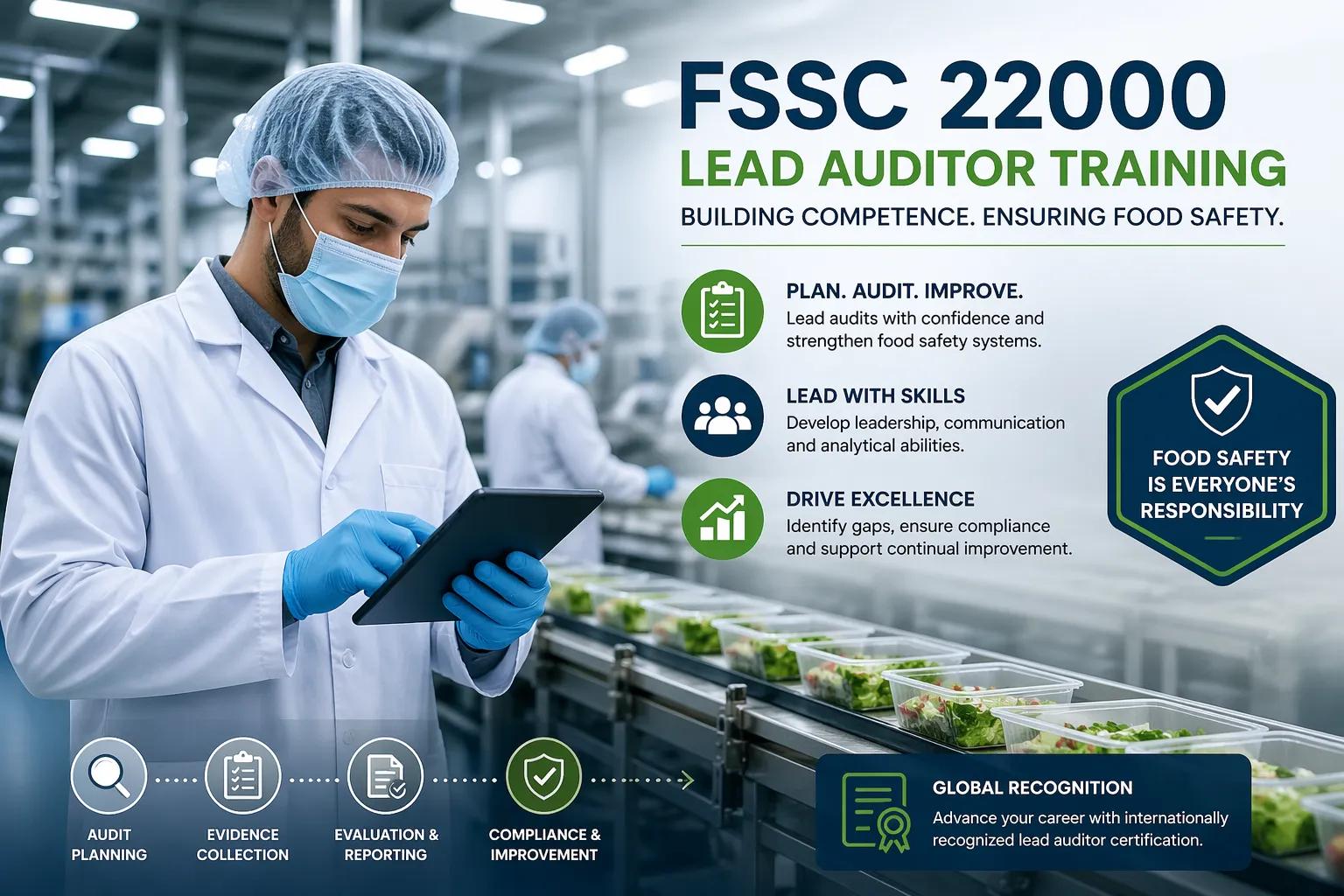
fssc 22000 internal auditor training
How FSSC 22000 Internal Auditor Training Is Transforming Food Safety Management
Introduction
The global food industry is experiencing rapid transformation driven by stricter regulations, digital technologies, consumer awareness, and supply chain complexities. Food manufacturers and processors are under increasing pressure to deliver safe products while maintaining compliance with international standards. As a result, FSSC 22000 Internal Auditor Training has become a critical investment for organizations aiming to strengthen their food safety management systems.
Internal auditors play an essential role in evaluating processes, identifying risks, and ensuring that food safety controls remain effective. Through FSSC 22000 Internal Auditor Training, professionals gain the expertise required to assess compliance, improve operational performance, and support certification requirements. In 2026, organizations are prioritizing skilled internal auditors to navigate emerging food safety challenges and maintain customer confidence.
1. Why FSSC 22000 Internal Auditor Training Matters More Than Ever
Food safety incidents can damage brand reputation, result in regulatory penalties, and disrupt supply chains. FSSC 22000 Internal Auditor Training helps organizations establish a proactive approach to food safety by developing auditors who can identify weaknesses before they become major issues.
The training enables participants to:
Understand FSSC 22000 requirements
Conduct systematic internal audits
Evaluate food safety controls
Verify compliance with food safety objectives
Support continual improvement initiatives
As food businesses expand globally, the need for qualified internal auditors continues to increase.
2. Essential Skills Gained Through FSSC 22000 Internal Auditor Training
One of the biggest advantages of FSSC 22000 Internal Auditor Training is the development of practical auditing skills that can be applied immediately within food safety management systems.
Audit Planning and Preparation
Participants learn how to prepare audit schedules, objectives, and audit checklists.
Food Safety Risk Evaluation
The course focuses on identifying hazards and assessing risks throughout food production processes.
Effective Audit Communication
Auditors develop interviewing and communication skills needed to gather accurate information.
Nonconformity Identification
Participants learn how to recognize compliance gaps and document findings professionally.
Corrective Action Verification
Training includes methods for evaluating corrective actions and ensuring long-term effectiveness.
These skills contribute significantly to stronger food safety performance.
3. Industries That Benefit from FSSC 22000 Internal Auditor Training
FSSC 22000 Internal Auditor Training is valuable across various sectors within the food supply chain.
Food Manufacturing
Manufacturers use internal audits to maintain product safety and certification compliance.
Food Packaging Companies
Packaging providers benefit from improved process controls and risk management practices.
Warehousing and Distribution
Storage and logistics providers can strengthen food safety controls throughout the supply chain.
Beverage Production
Auditors help verify quality and food safety requirements within beverage manufacturing operations.
Ingredient Suppliers
Raw material suppliers use internal audits to support traceability and compliance objectives.
This broad applicability makes auditor training highly relevant throughout the food industry.
4. Emerging Food Safety Trends Driving Auditor Demand in 2026
Several trends are increasing the importance of FSSC 22000 Internal Auditor Training in today's business environment.
Digital Food Safety Platforms
Organizations are replacing manual systems with cloud-based food safety management solutions.
Artificial Intelligence for Food Risk Monitoring
AI technologies are helping companies predict and prevent food safety incidents.
Supply Chain Traceability
Enhanced traceability requirements are creating new auditing responsibilities.
Sustainability and Food Integrity
Businesses are integrating sustainability goals into food safety programs.
Global Regulatory Alignment
International trade continues to drive the adoption of globally recognized food safety standards.
These developments require auditors to stay updated with evolving industry expectations.
5. Career Growth Opportunities After FSSC 22000 Internal Auditor Training
Completing FSSC 22000 Internal Auditor Training can significantly enhance career prospects within the food sector.
Professionals may advance into roles such as:
Food Safety Auditor
Quality Assurance Executive
Compliance Officer
Food Safety Manager
Certification Coordinator
Supply Chain Quality Specialist
Organizations increasingly seek professionals who understand both food safety requirements and auditing methodologies. This combination of expertise creates strong career opportunities across domestic and international markets.
Conclusion
FSSC 22000 Internal Auditor Training is becoming an essential qualification for professionals involved in food safety, quality management, and regulatory compliance. The training develops practical auditing skills that help organizations maintain certification, reduce risks, and improve food safety performance.
As digital transformation, AI-driven monitoring, traceability systems, and sustainability initiatives continue to reshape the food industry, the role of internal auditors will become even more important. Investing in FSSC 22000 Internal Auditor Training enables professionals to stay competitive while helping organizations achieve operational excellence and consumer trust.
For businesses committed to food safety and continuous improvement, trained internal auditors remain one of the strongest assets for long-term success in 2026 and beyond.