

ISO 17025 Internal Auditor Training: Complete Guide to Laboratory Quality Management in 2026
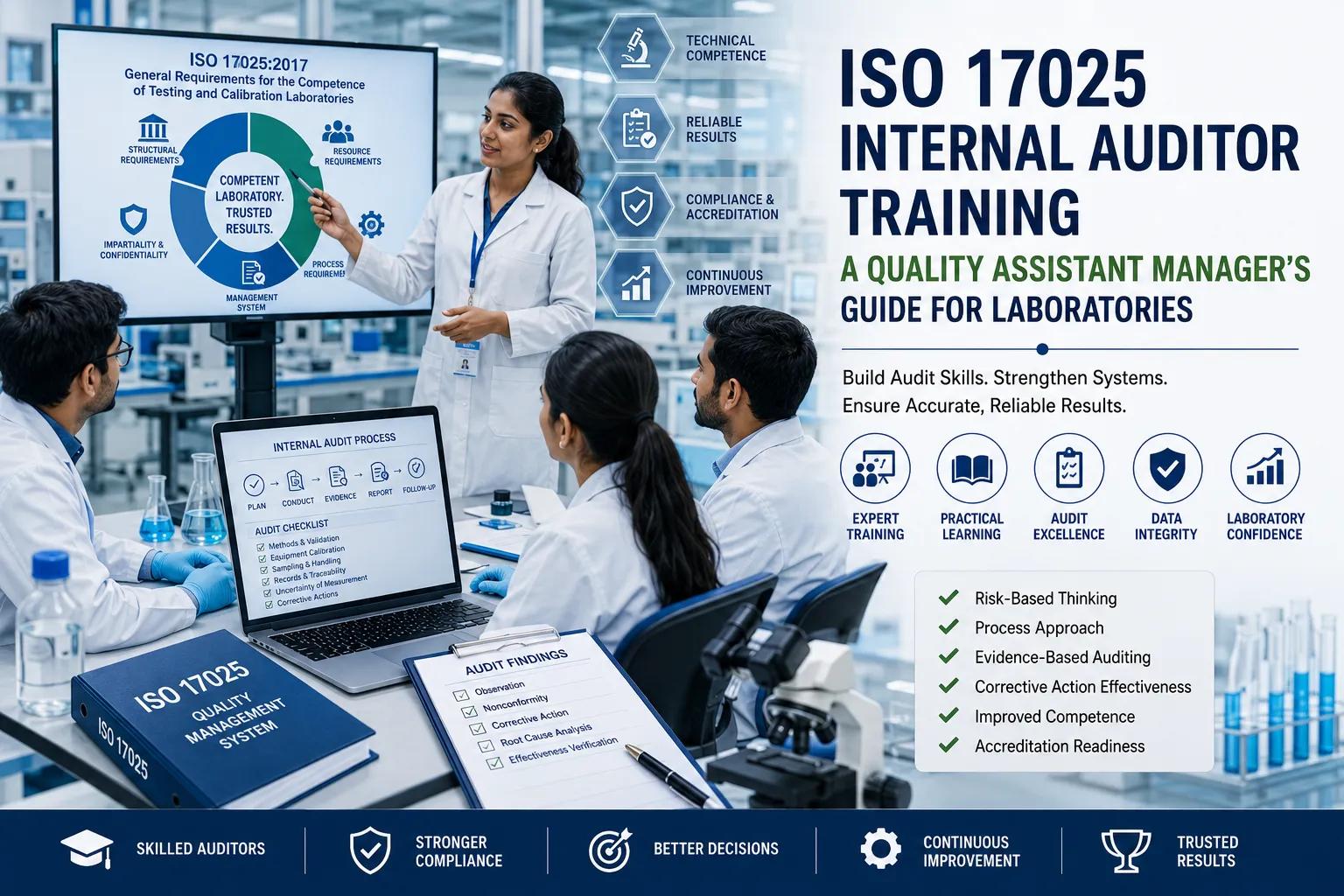
iso 17025 internal auditor training
Introduction
Testing and calibration laboratories play a critical role in ensuring the accuracy, reliability, and consistency of results across industries such as healthcare, pharmaceuticals, food testing, manufacturing, environmental science, and research. To maintain international credibility and comply with accreditation requirements, laboratories implement Quality Management Systems based on ISO/IEC 17025. As a result, ISO 17025 Internal Auditor Training has become an essential qualification for laboratory professionals, quality managers, and internal auditors.
ISO 17025 Internal Auditor Training provides participants with the knowledge and practical skills required to conduct internal audits of laboratory management systems. The course focuses on evaluating technical competence, management requirements, risk-based thinking, and continual improvement while ensuring compliance with ISO/IEC 17025:2017.
With laboratories increasingly adopting digital technologies, Laboratory Information Management Systems (LIMS), AI-assisted testing, and automation in 2026, trained internal auditors are essential for maintaining laboratory excellence and accreditation.
1. What Is ISO 17025 Internal Auditor Training?
ISO 17025 Internal Auditor Training is a professional auditing course designed to help laboratory personnel understand the requirements of ISO/IEC 17025 and perform effective internal audits.
The training typically includes:
Overview of ISO/IEC 17025:2017 requirements
Laboratory Quality Management System (LQMS)
Technical and management requirements
Process-based auditing techniques
Risk-based thinking
Audit planning and scheduling
Evidence collection
Identifying nonconformities
Corrective action verification
Audit reporting and follow-up
By completing ISO 17025 Internal Auditor Training, participants gain the competence to evaluate laboratory processes, ensure compliance, and promote continual improvement in testing and calibration activities.
2. Why ISO 17025 Internal Auditor Training Is Important in 2026
Modern laboratories must deliver accurate, traceable, and reliable results while meeting increasingly stringent accreditation and regulatory requirements. Internal audits help laboratories maintain compliance and improve operational efficiency.
ISO 17025 Internal Auditor Training enables organizations to:
Improve laboratory quality systems
Maintain accreditation requirements
Ensure accurate testing and calibration
Reduce operational risks
Improve customer confidence
Strengthen technical competence
Support continual improvement
Prepare for accreditation assessments
Several emerging trends have increased the importance of ISO 17025 Internal Auditor Training, including:
AI-assisted laboratory testing
Laboratory Information Management Systems (LIMS)
Digital laboratory transformation
Automation in testing laboratories
Data integrity and cybersecurity
Remote laboratory monitoring
Sustainable laboratory operations
Smart laboratory technologies
Organizations adopting these technologies require trained internal auditors to verify compliance, identify improvement opportunities, and maintain laboratory excellence.
3. Who Should Attend ISO 17025 Internal Auditor Training?
ISO 17025 Internal Auditor Training is suitable for professionals responsible for implementing, maintaining, or auditing laboratory quality systems.
This course is ideal for:
Laboratory Managers
Internal Auditors
Quality Managers
Laboratory Technicians
Calibration Engineers
Testing Engineers
Research Scientists
Quality Assurance Professionals
Accreditation Coordinators
ISO Consultants
Whether you work in a testing laboratory, calibration laboratory, research institution, pharmaceutical company, or manufacturing organization, ISO 17025 Internal Auditor Training enhances your ability to conduct effective internal audits and improve laboratory performance.
4. Benefits of ISO 17025 Internal Auditor Training
Completing ISO 17025 Internal Auditor Training offers valuable benefits for both individuals and organizations.
Career Benefits
Internationally recognized auditing qualification
Increased career opportunities
Enhanced laboratory auditing skills
Improved professional credibility
Better understanding of accreditation requirements
Organizational Benefits
Organizations benefit through:
Improved laboratory efficiency
Better compliance with ISO/IEC 17025
Reduced testing errors
Enhanced customer confidence
Stronger quality assurance practices
Improved continual improvement processes
Practical Skills You Will Learn
Participants gain practical expertise in:
Planning laboratory internal audits
Reviewing quality documentation
Conducting audit interviews
Assessing technical competence
Evaluating measurement traceability
Identifying audit findings
Preparing professional audit reports
Verifying corrective actions
These competencies enable laboratories to consistently deliver reliable results while maintaining accreditation and customer trust.
5. How to Choose the Best ISO 17025 Internal Auditor Training Provider
Selecting the right ISO 17025 Internal Auditor Training provider ensures participants receive practical knowledge and industry-recognized certification.
Consider the following factors before enrolling:
Accredited Training Programs
Choose providers that offer courses aligned with internationally recognized auditing principles and ISO/IEC 17025 requirements.
Experienced Trainers
Look for instructors with practical experience in laboratory management, accreditation assessments, and quality auditing.
Practical Learning Approach
A comprehensive course should include:
Laboratory audit case studies
Audit simulations
Documentation review exercises
Risk assessment workshops
Corrective action analysis
Interactive group activities
Flexible Learning Options
Most leading providers offer:
Live online training
Classroom sessions
Corporate in-house training
Weekend programs
Virtual instructor-led courses
Future-Oriented Course Content
Modern ISO 17025 Internal Auditor Training should include advanced topics such as:
Artificial Intelligence in laboratories
Laboratory automation
Digital quality management systems
Data integrity and cybersecurity
Sustainable laboratory practices
Cloud-based laboratory management
These topics prepare professionals to manage the rapidly evolving laboratory environment while maintaining compliance with international standards.
Conclusion
ISO 17025 Internal Auditor Training is an essential professional qualification for individuals involved in laboratory quality management, testing, calibration, and accreditation. As laboratories continue to adopt digital transformation, automation, AI-assisted testing, and advanced quality systems, qualified internal auditors are increasingly important for ensuring compliance and maintaining technical excellence.
Completing ISO 17025 Internal Auditor Training equips professionals with the knowledge to plan, conduct, and report effective internal audits while supporting continual improvement within laboratory management systems. The certification also enhances career opportunities across pharmaceutical laboratories, healthcare organizations, research institutions, manufacturing industries, food testing laboratories, environmental testing facilities, and calibration centers.
With increasing global emphasis on data accuracy, laboratory accreditation, digital laboratories, cybersecurity, and sustainable operations in 2026, ISO 17025 Internal Auditor Training provides long-term value for both professionals and organizations. Certified internal auditors help laboratories improve quality, strengthen technical competence, maintain accreditation, and build confidence in testing and calibration results, making this training a worthwhile investment for a successful future.