

ISO 22000 Lead Auditor Training: Course Benefits, Requirements and Career Opportunities
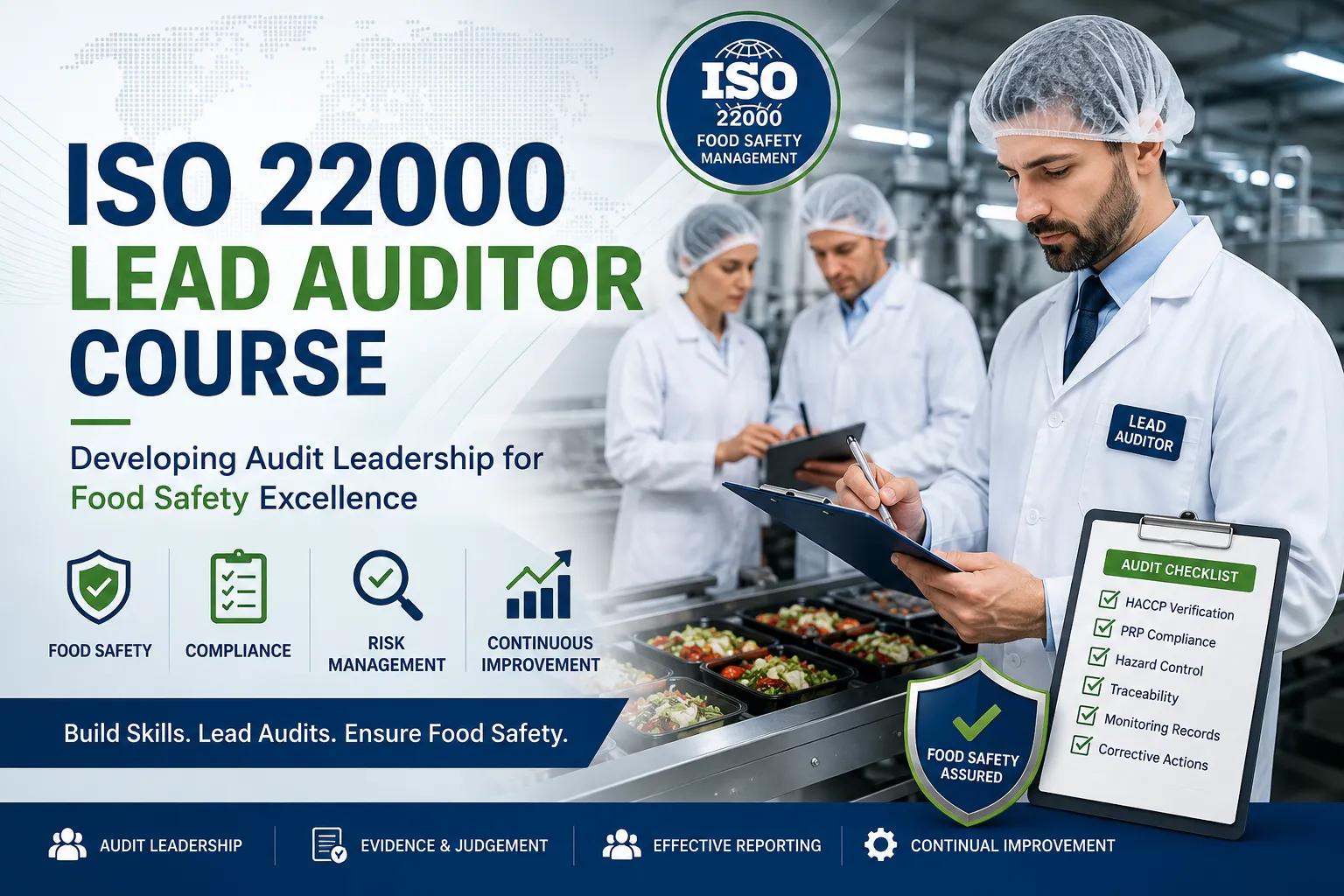
ISO 22000 Lead Auditor Training
Introduction
Food safety is an essential responsibility for organisations involved in manufacturing, processing, packaging, storage and distribution. Increasing customer expectations, strict food safety regulations and complex supply chains have created a growing demand for qualified food safety professionals. Organisations need experienced auditors who can evaluate management systems, identify potential hazards and ensure effective food safety practices.
ISO 22000 lead auditor training is designed for professionals who want to develop the knowledge and practical skills required to audit Food Safety Management Systems (FSMS). The programme explains ISO 22000 requirements, HACCP principles, audit procedures and risk management techniques. It is particularly beneficial for quality managers, food safety professionals, consultants and internal auditors seeking career advancement.
1. Understanding ISO 22000 Lead Auditor Training
ISO 22000 is an internationally recognised standard that specifies requirements for establishing, implementing and maintaining a Food Safety Management System. It applies to organisations throughout the food supply chain.
ISO 22000 lead auditor training helps participants understand how to evaluate food safety processes, identify biological, chemical and physical hazards, and assess whether an organisation meets the applicable standard requirements.
The course also introduces auditing guidelines based on ISO 19011, helping professionals understand audit principles, planning and reporting techniques.
2. Key Benefits of ISO 22000 Lead Auditor Training
Enrolling in ISO 22000 lead auditor training offers several professional advantages.
Improved auditing skills: Learn to plan, conduct and report management system audits.
Food safety expertise: Understand HACCP principles and food safety hazard control.
Career advancement: Explore opportunities in food manufacturing, quality assurance and certification.
Professional credibility: Develop knowledge of internationally recognised food safety requirements.
Practical knowledge: Improve communication, evidence collection and non-conformity reporting skills.
These benefits help professionals contribute to stronger food safety practices and organisational performance.
3. ISO 22000 Lead Auditor Course Modules and Skills
A comprehensive ISO 22000 lead auditor training programme generally covers the following topics:
Introduction to ISO 22000 requirements and FSMS principles.
Understanding HACCP methodology and food safety hazards.
Prerequisite programmes and operational controls.
Food safety risk assessment and hazard analysis.
Audit planning, preparation and checklist development.
Conducting opening and closing meetings.
Identifying non-conformities and collecting objective evidence.
Preparing audit reports and evaluating corrective actions.
Participants also develop analytical thinking, problem-solving, communication and audit leadership abilities.
4. Eligibility Criteria and Career Opportunities After ISO 22000 Training
The ISO 22000 lead auditor training programme is suitable for professionals working in food manufacturing, quality assurance, food safety management and auditing. Quality managers, food technologists, production supervisors, consultants and internal auditors can benefit from this qualification.
After completing the training, participants can explore career opportunities such as:
Food Safety Lead Auditor
Quality Assurance Manager
Food Safety Consultant
FSMS Auditor
HACCP Coordinator
Compliance Auditor
The course can also help professionals develop the expertise required to support food businesses with management system implementation and auditing. Formal auditor registration depends on the applicable qualification scheme and experience requirements.
5. Latest Food Safety Trends and ISO 22000 Auditing Developments
Food safety management is evolving through technological innovation, updated standards and changing supply chain requirements. The ISO 22000 lead auditor training programme helps professionals understand these developments.
AI-powered food safety: Artificial intelligence supports predictive risk analysis, contamination monitoring and early hazard detection.
Digital food traceability: Advanced tracking systems improve ingredient monitoring, supplier transparency and product recall management.
Updated prerequisite programmes: The ISO 22002 series received important updates in 2025, providing revised food safety prerequisite programme requirements for different sectors.
Climate change considerations: The ISO 22000:2018 Amendment 1:2024 requires organisations to consider climate change when determining relevant organisational issues.
Upcoming ISO 22000 revision: ISO/DIS 22000 is currently under development to replace ISO 22000:2018. Auditors should follow official updates and prepare for future transition requirements.
Understanding these developments helps auditors evaluate modern food safety management practices and prepare for changing industry expectations.
Conclusion
Food safety auditing is essential for protecting consumers, maintaining product quality and improving organisational performance. ISO 22000 lead auditor training provides professionals with the technical knowledge and practical skills required to evaluate Food Safety Management Systems effectively.
By learning HACCP principles, hazard analysis, audit planning, evidence collection and corrective action management, participants can strengthen their professional capabilities and explore opportunities across the food industry. Choosing a recognised training provider with experienced trainers and an appropriate course approval scheme is an important step towards developing a successful career in food safety auditing.