

ISO 22000 Lead Auditor Training Course in India: Complete Guide to Food Safety Auditing Excellence in 2026
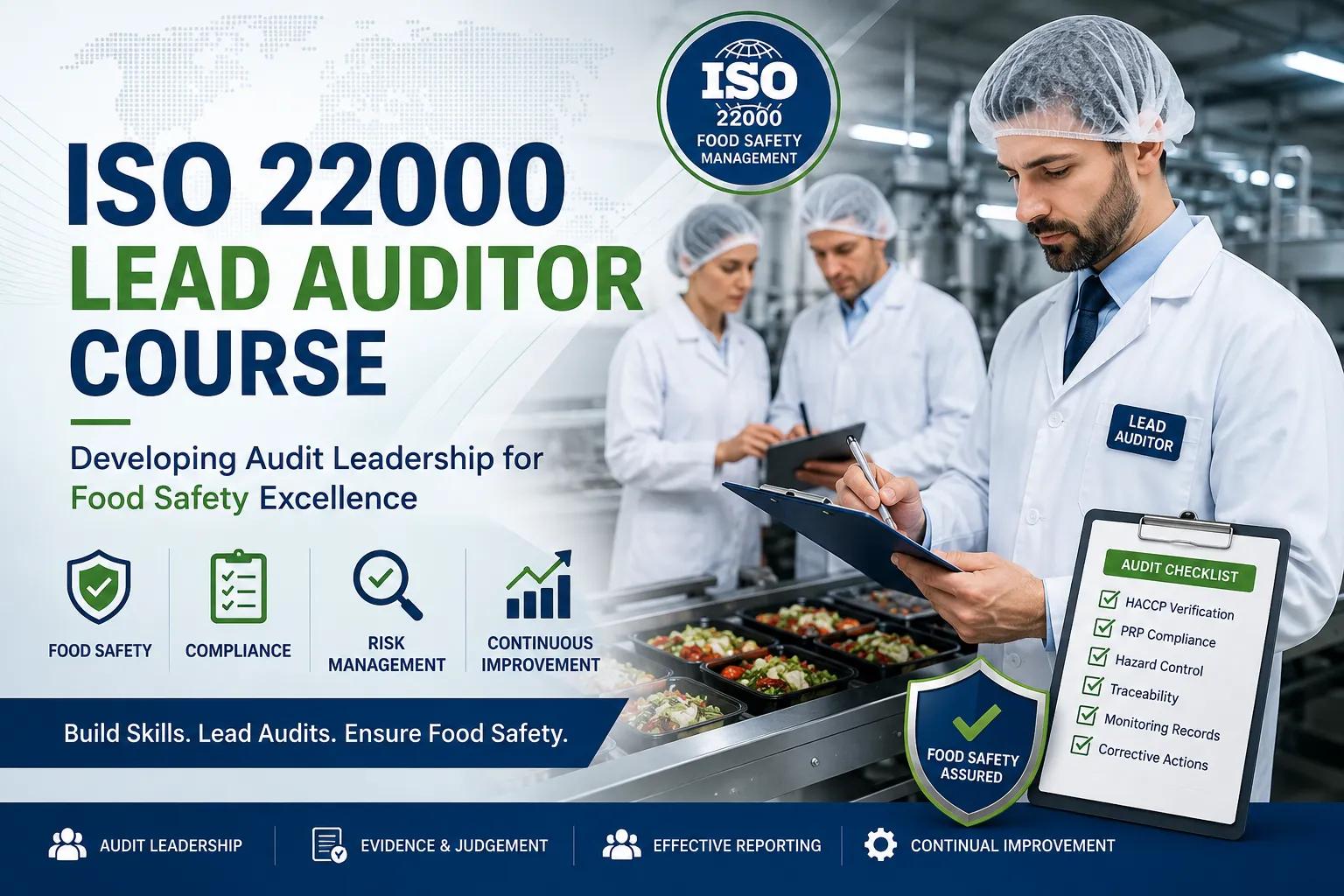
ISO 22000 Lead Auditor Training Course
Introduction
The ISO 22000 Lead Auditor Training Course in India is one of the most in-demand professional training programmes for individuals working in the food manufacturing, processing, packaging, logistics, hospitality, and retail sectors. With increasing consumer awareness, stricter food safety regulations, and global trade requirements, organisations are prioritising qualified auditors who can evaluate and improve Food Safety Management Systems (FSMS).
An ISO 22000 Lead Auditor Training Course in India equips professionals with the skills to plan, conduct, manage, and report audits based on ISO 22000 requirements and ISO 19011 auditing guidelines. Participants also gain a thorough understanding of HACCP principles, food safety hazards, operational controls, risk-based thinking, and continual improvement practices.
As India continues to expand its food exports and strengthen compliance with global food safety standards, completing an ISO 22000 Lead Auditor Training Course in India can significantly improve career opportunities and help organisations maintain high levels of food safety and customer confidence.
Why Choose an ISO 22000 Lead Auditor Training Course in India?
An ISO 22000 Lead Auditor Training Course in India prepares professionals to assess the effectiveness of Food Safety Management Systems across the food supply chain. The programme combines theoretical knowledge with practical auditing exercises, enabling participants to perform first-party, second-party, and third-party audits confidently.
India is one of the world's largest food producers and exporters, making food safety compliance a critical business requirement. Organisations are increasingly adopting ISO 22000 to meet customer expectations, regulatory requirements, and international market demands. As a result, trained lead auditors are highly valued across food manufacturing companies, certification bodies, consulting firms, and regulatory organisations.
An ISO 22000 Lead Auditor Training Course in India also helps professionals understand legal compliance, food safety risks, hazard control measures, and audit reporting techniques that contribute to safer food production.
Key Benefits of an ISO 22000 Lead Auditor Training Course in India
Enrolling in an ISO 22000 Lead Auditor Training Course in India offers numerous professional and organisational benefits. It enhances technical knowledge while building practical auditing skills recognised across the food industry.
Some of the major benefits include:
Develop internationally recognised food safety auditing skills.
Learn ISO 22000:2018 requirements in detail.
Understand HACCP principles and food safety hazards.
Gain expertise in planning and conducting effective audits.
Improve knowledge of risk-based thinking and operational controls.
Learn audit reporting and corrective action verification.
Support continual improvement within Food Safety Management Systems.
Increase career opportunities in food manufacturing and certification.
Strengthen supplier evaluation and food safety compliance.
Earn a globally respected lead auditor qualification.
Professionals who complete an ISO 22000 Lead Auditor Training Course in India become valuable assets for organisations committed to delivering safe, high-quality food products.
What You Will Learn in an ISO 22000 Lead Auditor Training Course in India
A comprehensive ISO 22000 Lead Auditor Training Course in India covers every aspect of food safety auditing and management system implementation.
Typical course modules include:
Introduction to Food Safety Management Systems (FSMS)
ISO 22000:2018 clauses and requirements
HACCP principles and implementation
Food safety hazards and risk assessment
Prerequisite Programmes (PRPs)
Operational Prerequisite Programmes (OPRPs)
Food safety objectives and performance evaluation
Internal and supplier auditing
Audit principles based on ISO 19011
Audit planning and preparation
Evidence collection techniques
Interviewing methods during audits
Identifying nonconformities
Audit reporting and documentation
Corrective actions and follow-up audits
Most ISO 22000 Lead Auditor Training Course in India programmes also include practical case studies, group discussions, audit simulations, and real-life examples that help participants gain confidence in conducting professional food safety audits.
Who Should Attend an ISO 22000 Lead Auditor Training Course in India?
An ISO 22000 Lead Auditor Training Course in India is designed for professionals involved in food safety, quality assurance, compliance, and auditing.
The course is ideal for:
Food Safety Managers
Quality Assurance Managers
HACCP Team Leaders
Internal Auditors
Food Manufacturing Supervisors
Production Managers
Quality Control Professionals
Compliance Officers
Food Consultants
Certification Body Auditors
Regulatory Professionals
Fresh graduates pursuing careers in food safety
Whether you work in food processing, dairy, beverages, seafood, packaging, catering, pharmaceuticals, or agriculture, this course provides the skills needed to audit Food Safety Management Systems effectively.
ISO 22000 Lead Auditor Training Course in India: 2026 Trends and Career Opportunities
The food industry is undergoing rapid transformation, making qualified auditors more valuable than ever. An ISO 22000 Lead Auditor Training Course in India prepares professionals to address modern food safety challenges and emerging technologies.
Key trends shaping food safety in 2026 include:
AI-powered food safety monitoring
Smart food manufacturing using Industry 4.0
Digital Food Safety Management Systems
Blockchain-enabled food traceability
ESG and sustainable food production
FSSAI compliance and regulatory updates
Remote and hybrid food safety audits
Predictive analytics for food safety risks
Automation in food quality inspection
Global export compliance and supply chain transparency
After completing an ISO 22000 Lead Auditor Training Course in India, professionals can pursue roles such as:
ISO 22000 Lead Auditor
Food Safety Manager
FSMS Consultant
HACCP Consultant
Compliance Manager
Certification Body Auditor
Supplier Auditor
Quality Assurance Manager
Food Safety Trainer
Regulatory Affairs Specialist
With India's food processing sector expanding rapidly and exports increasing, organisations are actively seeking professionals with recognised lead auditor qualifications to strengthen food safety and regulatory compliance.
Conclusion
An ISO 22000 Lead Auditor Training Course in India is an excellent investment for professionals looking to build expertise in food safety auditing and advance their careers. The course provides comprehensive knowledge of ISO 22000 requirements, HACCP principles, auditing methodologies, and Food Safety Management Systems while developing the practical skills required to conduct effective audits.
As food safety regulations become stricter and the demand for safe, high-quality food products continues to rise, organisations need qualified auditors who can ensure compliance and drive continual improvement. Completing an ISO 22000 Lead Auditor Training Course in India demonstrates your commitment to professional excellence and equips you with internationally recognised auditing skills.
Whether your goal is to become a lead auditor, food safety consultant, compliance manager, or quality professional, an ISO 22000 Lead Auditor Training Course in India provides the knowledge, confidence, and practical experience needed to succeed in the evolving food industry. By earning this qualification, you contribute to safer food production, stronger regulatory compliance, and sustainable business growth in India's dynamic food sector.